|
|
|
|
Welcome to NASHIA Connections!
The monthly newsletter for everything NASHIA.
You are receiving this newsletter because you are a valued partner in the brain injury community and with NASHIA.
This issue includes highlights from our team's presentations across the country in May, a brand new curriculum, important new resources, and news updates from both NASHIA and our partners. |
|
|
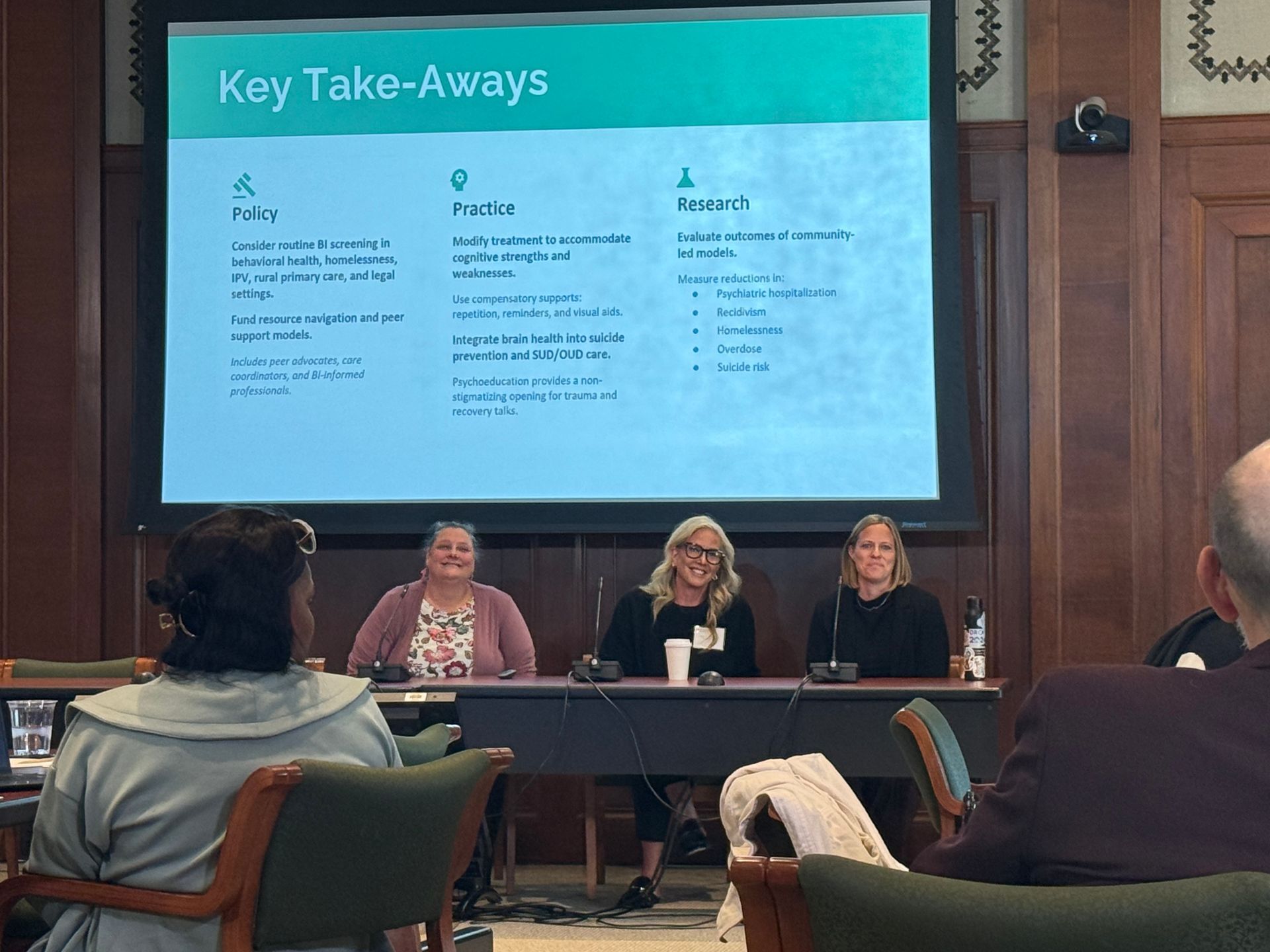
NASHIA members and partners Rebecca Quinn, Caitlin Synovec and Dr. Kim Gorgens all presented on the specific needs of individuals among underserved populations.
The Forum also heard from experts such as Dr. Jane King on the importance of utilizing CCBHCS and Drs. John Corrigan and Kathryn Hyzak related to neurologic informed mental health care.
Dr. Jenny Bogner did an amazing job chairing the meeting! |
|
|
|
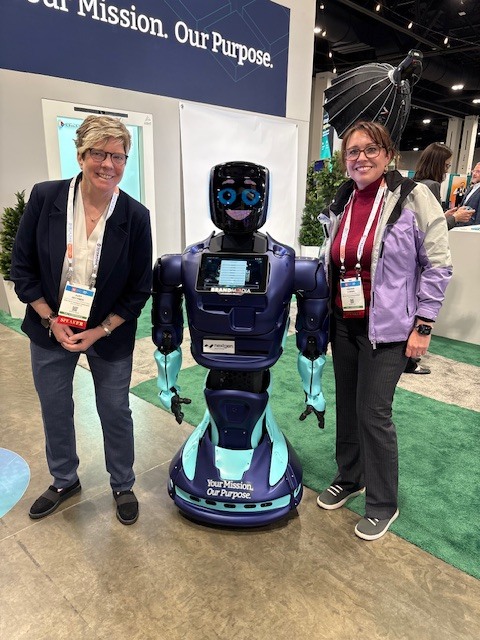
Advancing the field, one presentation at a time! Judy Dettmer, NASHIA Director of Technical Assistance and Special Projects, and Haleigh Cushen, Director of Program Management, attended the National Council for Mental Wellbeing's national conference, NatCon, in Denver, Colorado in late April. They, along with NASHIA member and Special Interest Group participant Rob Rogers of Maine's Kennebec Behavioral Health, presented on the work done in Maine, along with Brain Injury Association of America - Maine Chapter and Patty King, with screening with the OBISSS. The session was well attended and there was great interest from the audience about introducing screening for brain injury within the behavioral health space. NASHIA is proud to have Judy and Haleigh representing our mission!
|
|
|
|
|
|
Expertise in action! NASHIA's Zaida Ricker, Director of Strategic Partnerships and Policy, recently joined the Brain Injury Association of Kansas Annual Conference in Topeka! Zaida's presentation, "From Capitol Hill to Community Services: Federal Policy Impacts on Brain Injury Services," focused on the importance of policy on community supports.
|
|
|
|
On April 16th, Zaida provided a practical overview of the federal policy landscape shaping brain injury programs, spanning foundational legislation like the Traumatic Brain Injury (TBI) Act to evolving Medicaid policies that directly influence service delivery, eligibility, and funding. She highlighted how federal decisions translate into real-world impacts for state brain injury programs, providers, and people with lived experience. Her session also underscored why active engagement in policy matters, illustrating how input from states, advocates, and the brain injury community can influence federal priorities, guidance, and implementation.
Thank you, Zaida, for your leadership in education on federal policy topics, and thank you to BIAKS for a wonderful and impactful event!
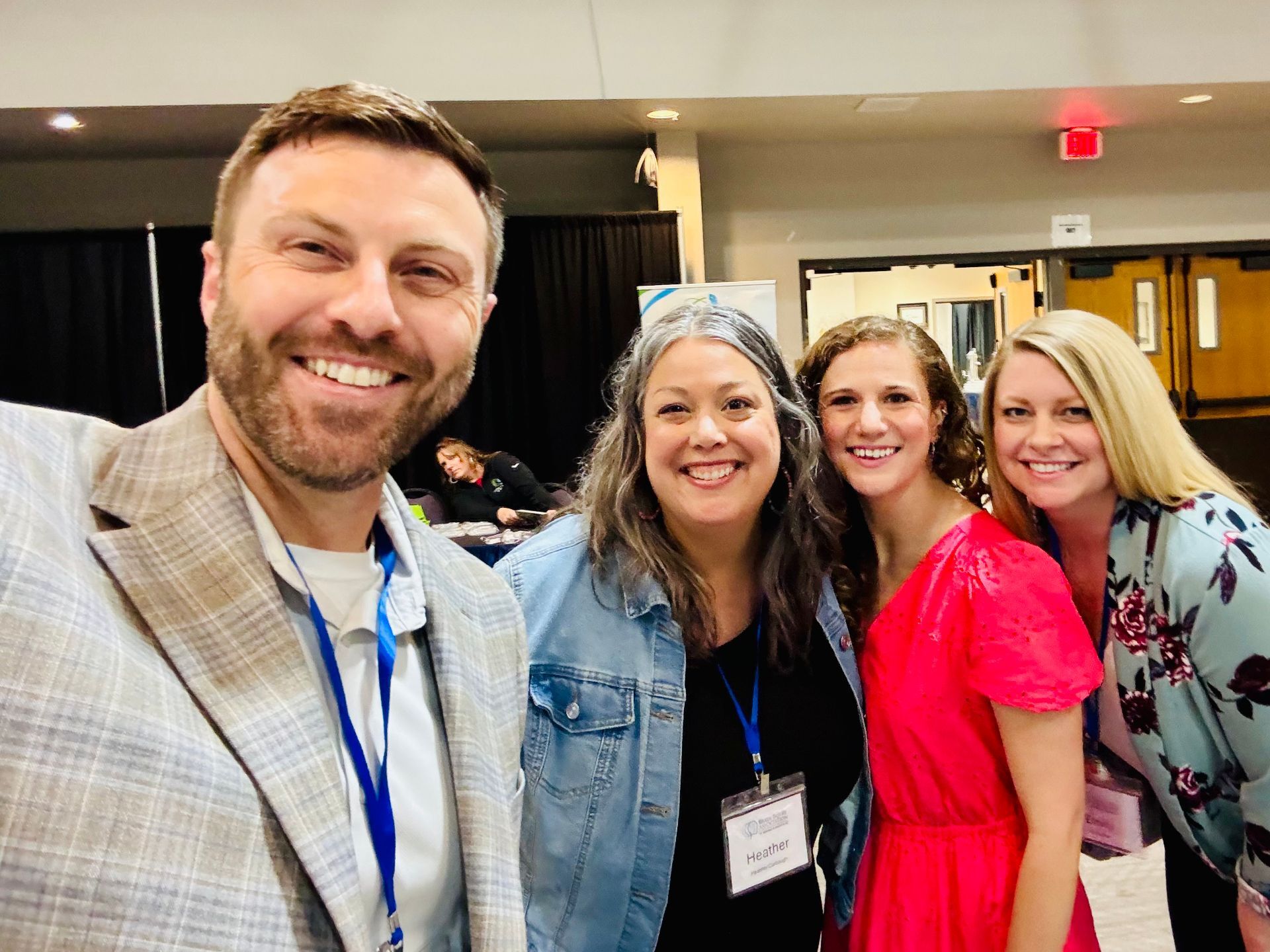
Zaida is pictured with NASHIA Members (left to right): Daniel Kennedy, Vice President of Outreach, Minds Matter LLC; Heather Carbaugh, Executive Director, Brain Injury Association of Kansas; and Emily Haug, Vice President of Operations and Finance, Minds Matter LLC. |
|
|
|
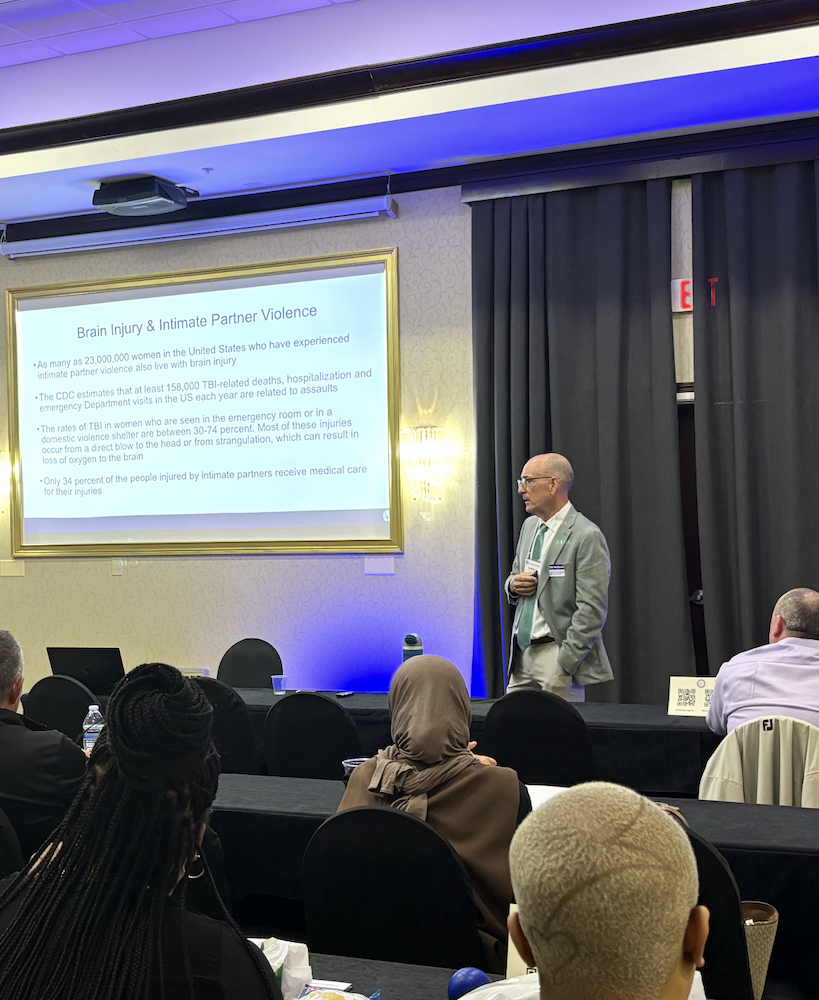
Tim wasted no time diving into the field, presenting on the critical need for brain injury screening within probation and court settings. He provided an overview of the Online Brain Injury Screening and Support System (OBISSS) - showing how data-driven tools can transform outcomes for justice-involved individuals.
Way to go, Tim! Welcome to the front lines of NASHIA’s mission!
|
|
|
|
|
|
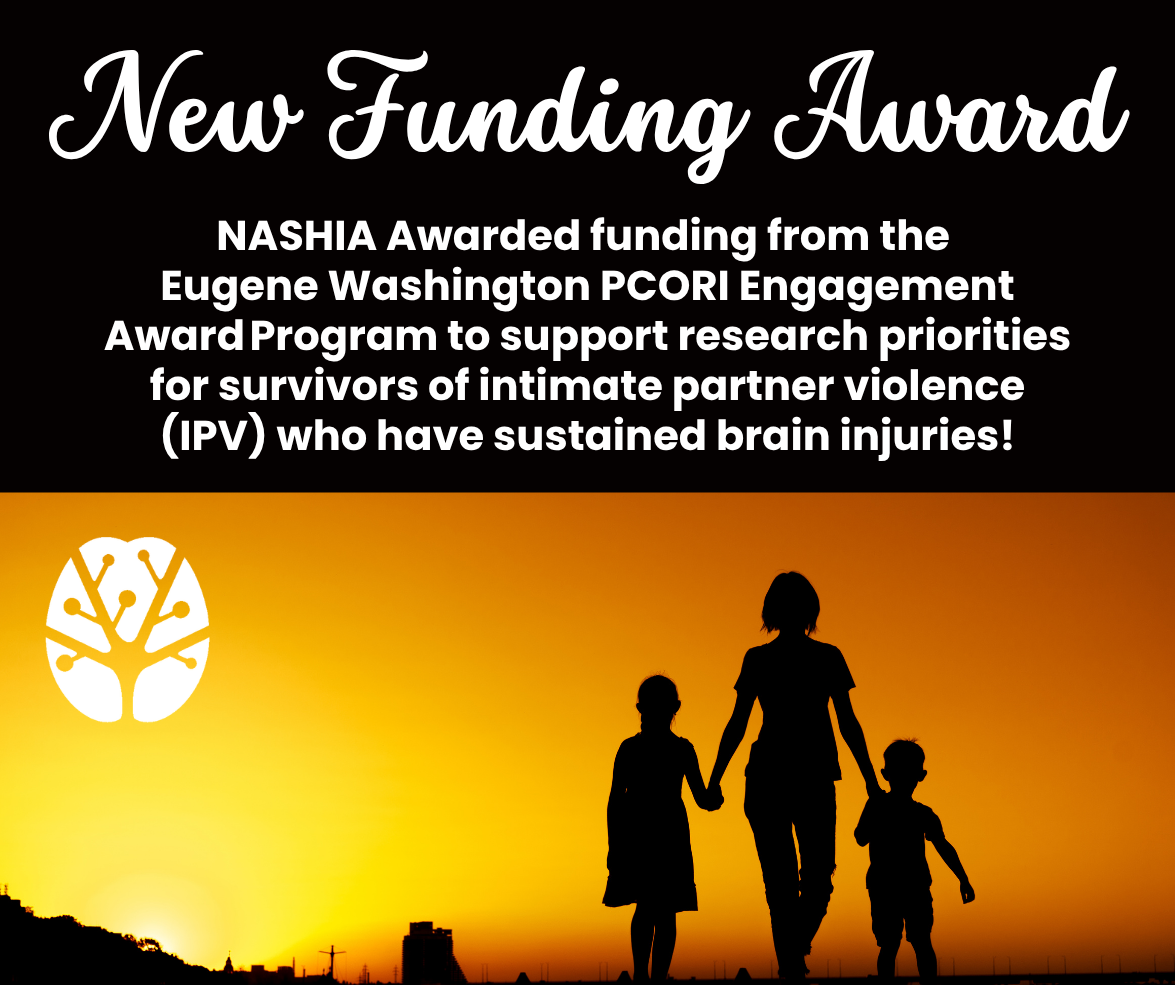
NASHIA is pleased to announce that we have been awarded funding through the Eugene Washington PCORI Engagement Award Program, an initiative of the Patient-Centered Outcomes Research Institute. The funds will support a convening of survivors of intimate partner violence (IPV) who have sustained brain injuries, along with researchers, clinicians, and legal system partners, to develop patient-centered research priorities and questions.
For more information, please contact Jill Daugherty, Innovation Center Director at NASHIA, at jdaugherty@nashia.org |
|
|
|
|
|
We're thrilled to welcome our newest subscribers to the Online Brain Injury Screening and Support System (OBISSS) Program!
Thank you for joining us in making a difference! |
|
|
|
Want to get access to OBISSS in your state? |
|
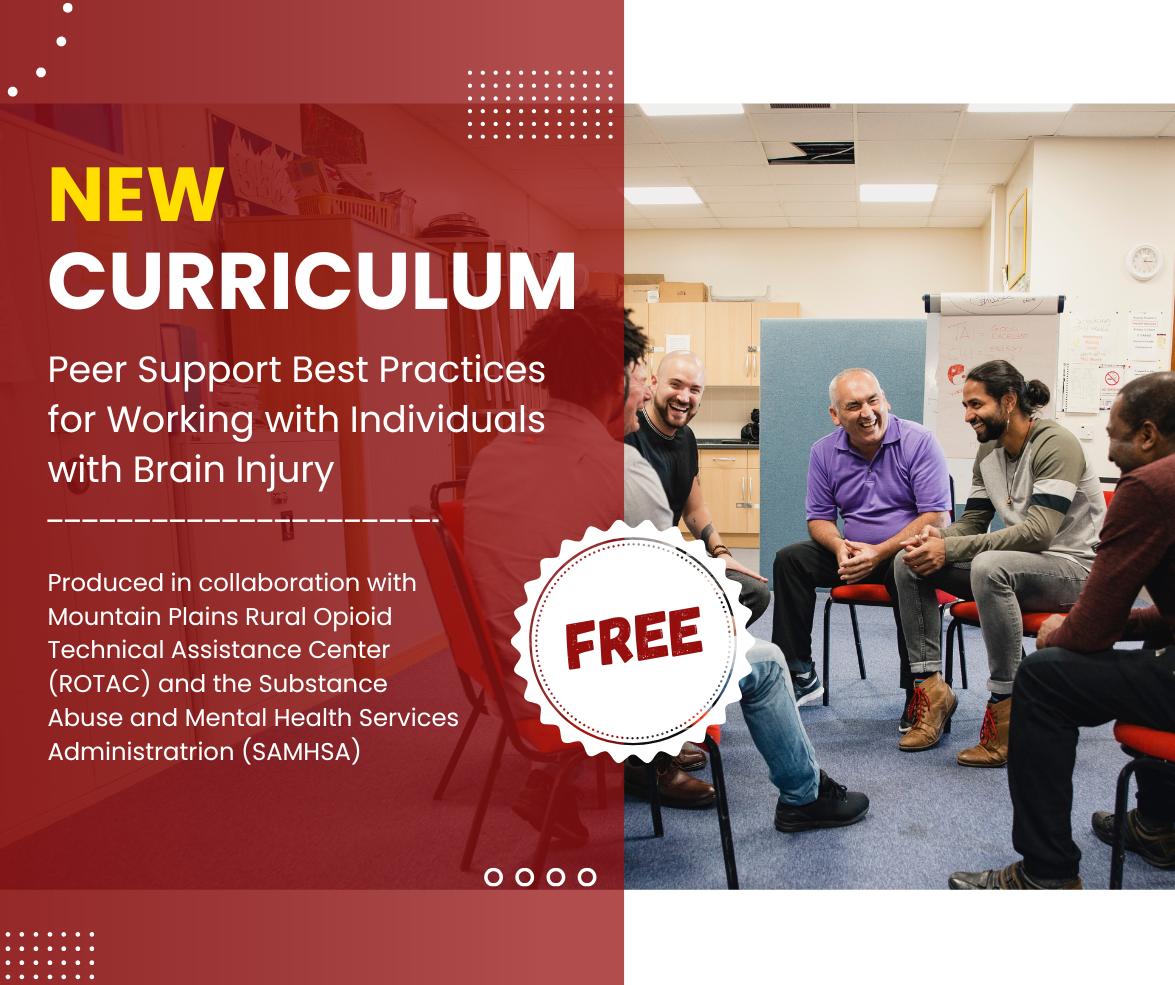
New Peer Support Curriculum |
|
The Blueprint for Effective Peer Support is Here!
We know that for many survivors, the most powerful medicine is talking to someone who has "been there." But building a peer support program that is safe, sustainable, and evidence-based isn't easy - until now.
NASHIA is proud to release our newest curriculum resource: Peer Support Best Practices for Working with Individuals with Brain Injury. This comprehensive guide is designed for state programs, community organizations, and advocates who want to establish or elevate peer support services. Along with our collaborators at the Mountain Plains Rural Opioid Technical Assistance Center, we’re providing a practical roadmap for training, implementation, and long-term success.
What’s inside the curriculum: 🔹 Introduction to brain injury and brain anatomy. 🔹 Guidance on the intersectionality of brain injury and related accommodations. 🔹 Tools and tips to deliver interactive and engaging peer support trainings.
Empower your community with the tools to support one another effectively. |
|
|
|
Missed the live session? The Moody Implementation Guide Webinar recording is now available! Implementation science is one thing on paper, but putting it into practice across a state network is a whole different challenge. If you couldn’t join us live for the walk-through of the Moody Brain Injury Resource Facilitation Implementation Guide, we have good news - the full archived recording is officially live! |
|
|
|
In this session, national experts break down the Delphi Consensus findings and show you exactly how to implement these standardized resource facilitation components in your state.
Why watch the archive today? 🔹 Get a step-by-step breakdown of the implementation framework. 🔹 Learn how to align your state's current workflows with national best practices. 🔹 Access it entirely on your own schedule, at no cost.
Turn the recording into your team's next professional development lunch-and-learn! |
|
|
|
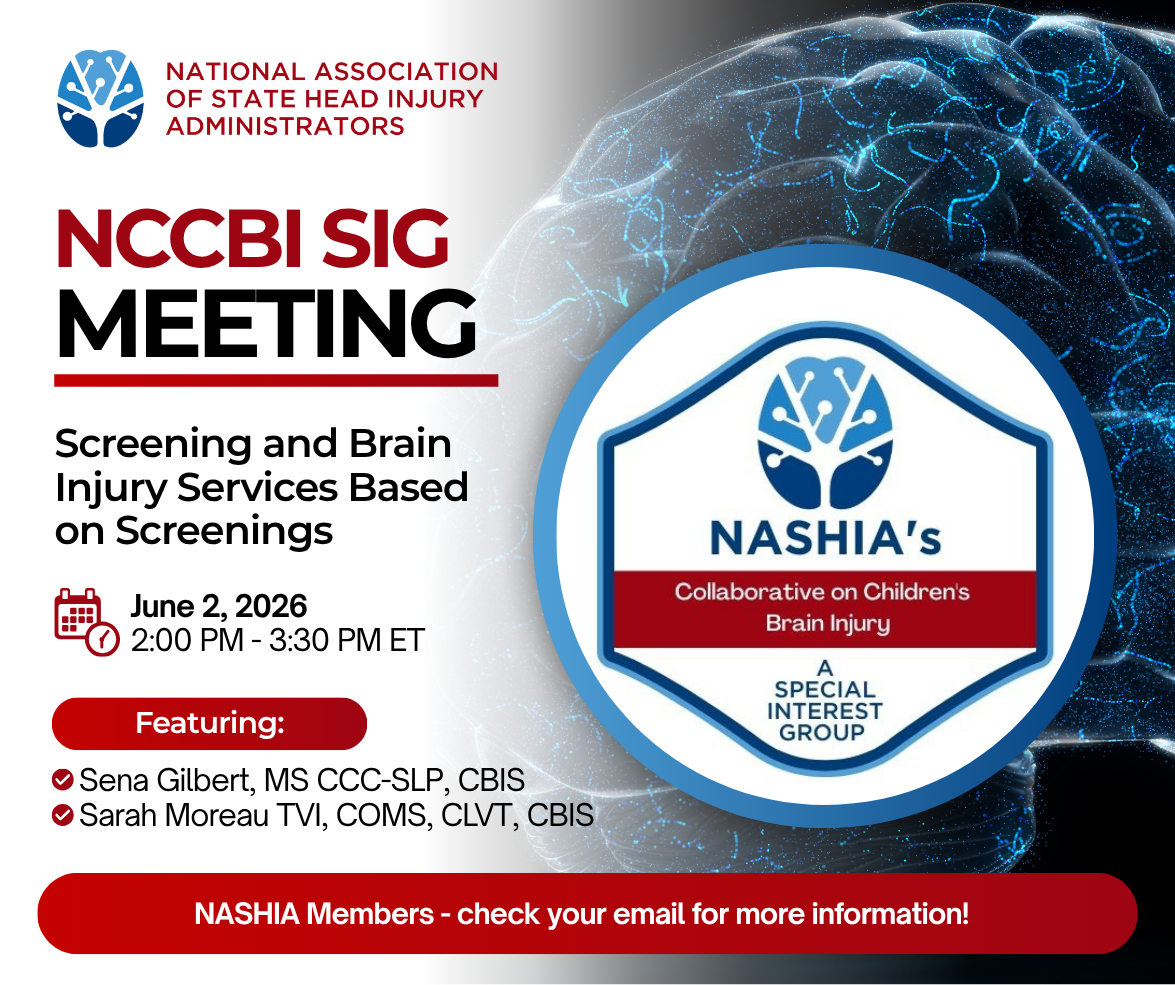
NASHIA's Collaborative on Children's Brain Injury Special Interest Group is scheduled to meet on June 2nd from 2:00pm - 3:30pm ET. Sena Gilbert and Sarah Moreau from Alaska will be our featured presenters. Special Interest Group meetings are a NASHIA Member benefit, we hope you are able to join us! For more information please contact Kelly Miller at kmiller@nashia.org. |
|
|
|
Learn more about our speakers!
🔹 Sena Gilbert, MS CCC-SLP, CBIS, is the State Coordinator for the Youth Brain Injury Program at SERRC, Alaska’s Educational Resource Center. A Speech-Language Pathologist and Certified Brain Injury Specialist, she is passionate about building collaborative systems of support for students and families impacted by brain injury across Alaska.
🔹 Sarah Moreau TVI, COMS, CLVT, CBIS, is a low vision rehabilitation specialist and Certified Brain Injury Specialist. She is the Regional Coordinator for the Youth Brain Injury Program. She has a background in special education with an emphasis on blindness and low vision, and a professional focus on neurological and cortical visual impairments. She enjoys collaborating with educational teams to bridge medical information with practical, classroom-based strategies that support student success following brain injury. |
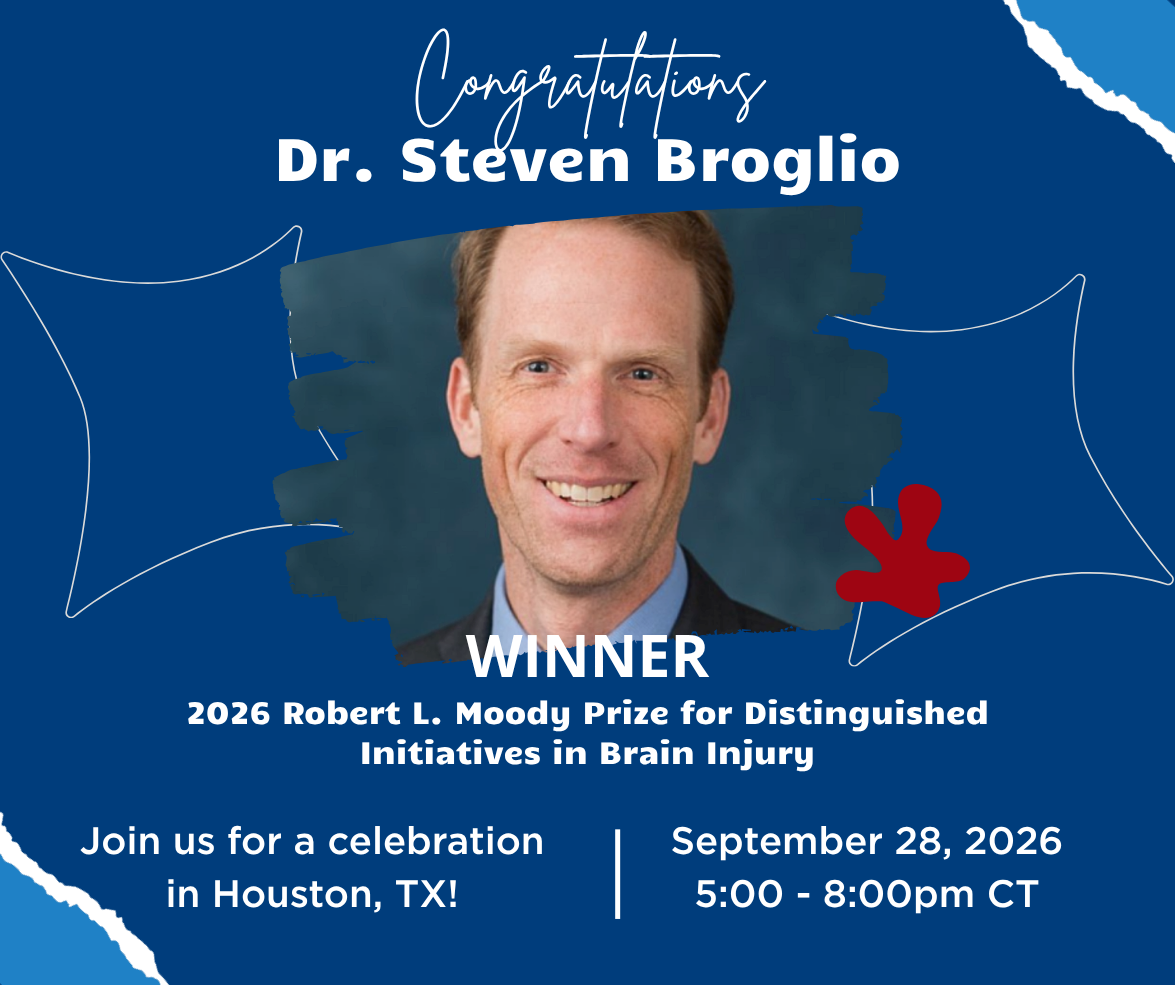
2026 Moody Prize Winner Announced! |
We are thrilled to announce that Dr. Steven Broglio is the recipient of the 2026 Robert L. Moody Prize for Distinguished Initiatives in Brain Injury!
Dr. Broglio has spent more than 20 years improving how we understand and treat concussions. His work, supported by over $100 million in research funding and more than 300 published studies, has helped doctors, schools, and policymakers better understand how concussions are identified, how people recover, and what long-term effects may look like for athletes, students, and service members. Dr. Broglio’s selection as the 2026 Robert L. Moody Prize recipient reflects both his major contributions to the field and his long-standing commitment to improving the lives of people affected by brain injury.
Join us in honoring his remarkable contributions at the Moody Prize Celebration: 📅 September 28, 2026 📍 South Shore Harbour Resort and Conference Center, Houston, Texas |
|
|
|
Community of Practice: Integrating Brain Injury into Certified Community Behavioral Health Clinic (CCBHC) Systems
Sessions run Sep 2026 - Feb 2027 |
|
|
Want to build upon your CCBHC efforts? NASHIA can help! We’ve assembled technical assistance packages, from foundational to fully customized support, to meet your needs.
Tier 1: Foundational/Group-Based Support Baseline for action and building shared understanding.
Tier 2: Blended Group and State-Specific Support Intermediate option supporting movement from exploration to implementation.
Tier 3: Intensive/Fully Customized State Support Full-service option to drive systems change and long-term sustainability. |
|
|
Mental Health Supports for Military Service Members
June 17, 2026 1:00pm - 2:30pm ET |
|
|
An estimated 17–23% of U.S. service members and veterans experience a traumatic brain injury, and many also face co-occurring mental health challenges such as post-traumatic stress disorder, depression, and suicide risk—highlighting a critical need for coordinated, effective systems of care.
This webinar explores innovative, collaborative approaches to advancing mental health and brain injury supports for service members, veterans, and their families. |
|
|
Beyond Capacity: Neuro-Ethical Decision Making in Brain Injury Across Systems of Care
July 15, 2026 1:00pm - 3:00pm ET |
|
|
This interactive workshop examines the ethical implications of supporting individuals living with acquired brain injury (ABI) and other neurocognitive disorders across systems of care.
Participants will explore neuro-ethical decision making — the process of making ethical choices that recognize how brain injury can affect cognition, behavior, emotional regulation, and capacity, while still honoring the person’s rights, values, and autonomy.
3.0 hours of CRCC Ethics CEs approved! |
|
|
Beyond Traditional Therapy: Faith Counseling, Cognitive Coaching, and Problem-Solving Approaches for Brain Injury
July 29, 2026 12:00pm - 1:30pm ET |
|
|
Individuals living with brain injury benefit from supportive approaches that extend beyond traditional clinical counseling.
This session explores alternative intervention strategies that promote resilience, self-management, and community participation: Faith-based counseling Wellness and cognitive health coaching through speech-language pathology (SLP) Supports, and innovative problem-solving interventions
|
|
|
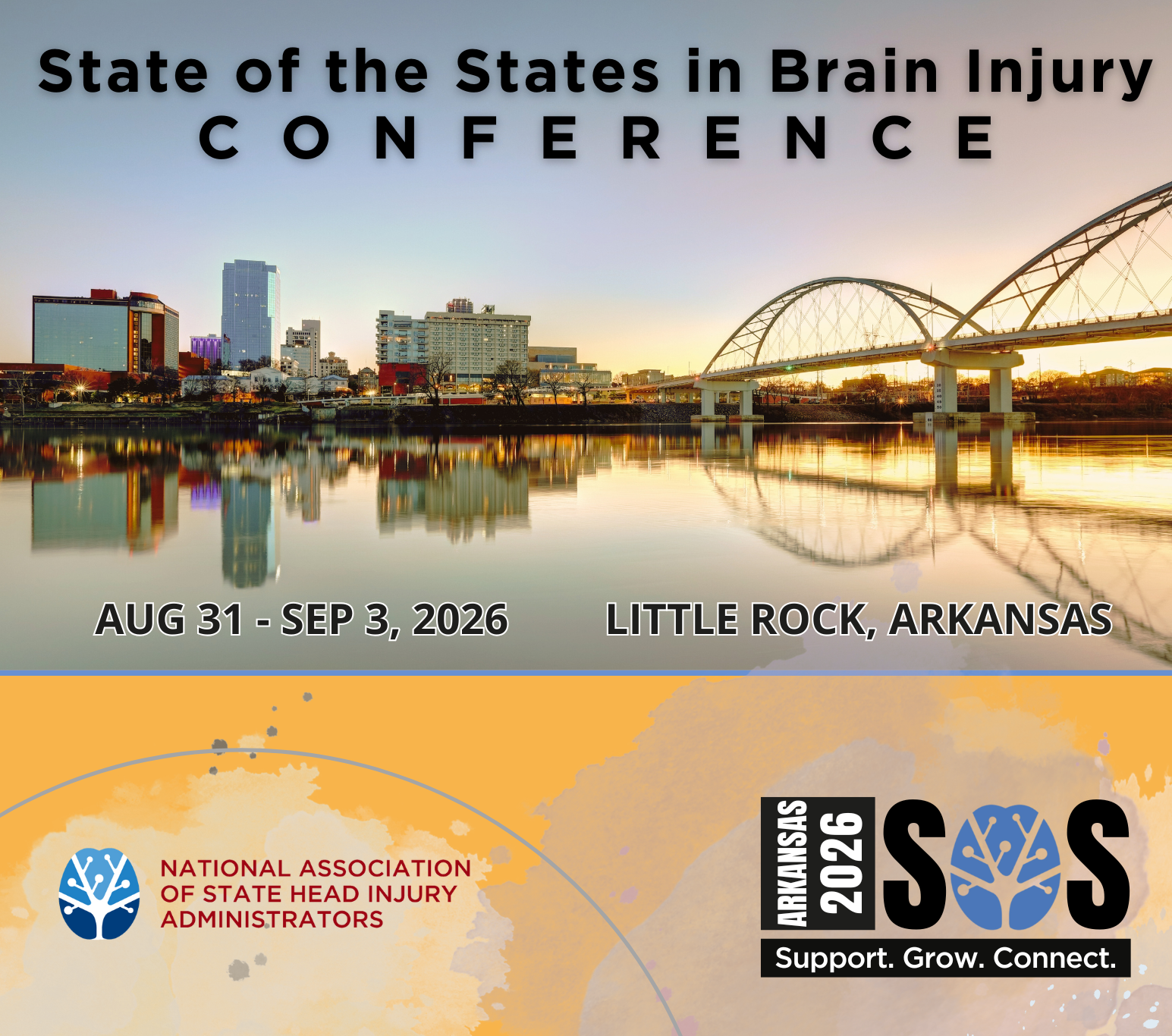
State of the States in Brain Injury Conference
August 31 - September 3, 2026 Little Rock, Arkansas |
|
|
2026's SOS will be the 37th consecutive year that NASHIA has hosted the conference.
SOS continues to bring state leaders together, alongside brain injury advocacy organizations, partners, researchers, and providers.
This year’s conference will highlight work in the Criminal Legal System (CLS), Clinical Practices (CP), Behavioral Health (BH), and Medicaid/Long-Term Services & Supports as content tracks, as well as bring content applicable to the whole brain injury community. |
|
|
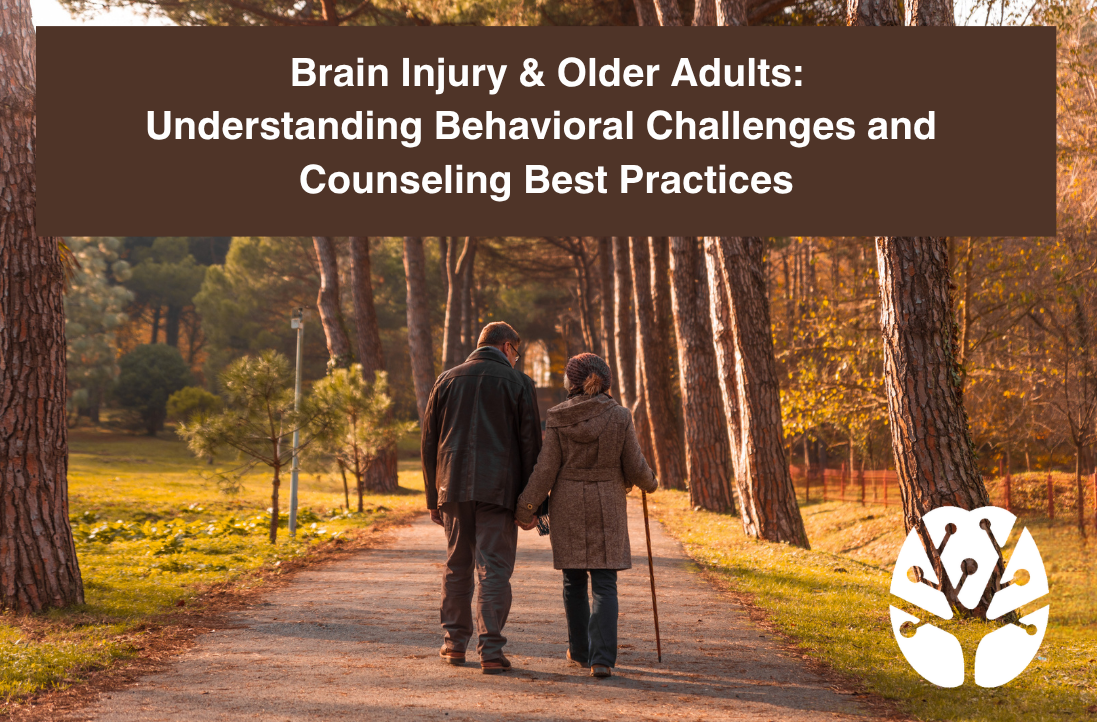
Brain Injury & Older Adults - Understanding Behavioral Challenges and Counseling Best Practices
September 23, 2026 1:00pm - 4:00pm ET |
|
|
This workshop focuses on the unique challenges faced by older adults who sustain brain injury, whether traumatic or non-traumatic, such as stroke, hypoxia, long COVID, or overdose.
Grounded in person-centered, strengths-based approaches, the workshop equips professionals with practical strategies to build rapport, adapt interventions, and provide responsive, culturally informed support tailored to the needs of older adults navigating life after brain injury. |
|
|
The Art and Science of Medicaid Budget Forecasting |
|
|
New from the National Association of Medicaid Directors, this brief explores how states navigate one of their most consequential and most complex fiscal responsibilities, and examines how states build and refine expenditure forecasts, the complexities introduced by new policy, public health events, and data gaps, and innovations states are using to improve accuracy and manage uncertainty. |
|
|
Brain Injury Resource Facilitation Implementation Guide |
|
|
In 2023, NASHIA - funded by the Moody Endowment - led a Delphi Consensus process with national brain injury leaders, resulting in Brain Injury Resource Facilitation: A Consensus on Best Practices (the “Consensus” report). In 2024, Moody Endowment provided additional funding to NASHIA to establish the Moody Center for Brain Injury Best Practices. The first two-year cohort used the Consensus findings to develop this implementation guide. |
|
|
Navigating Reasonable Accommodations: Preparing for Return-to-Work After Brain Injury |
|
|
Authored by NASHIA’s own Maria Crowley, Director of Professional Development, with support from the Administration for Community Living Disability Employment TA Center, this resource outlines how individuals returning to work after brain injury can better prepare, and find support through resources and reasonable accommodations from their employer. |
|
|
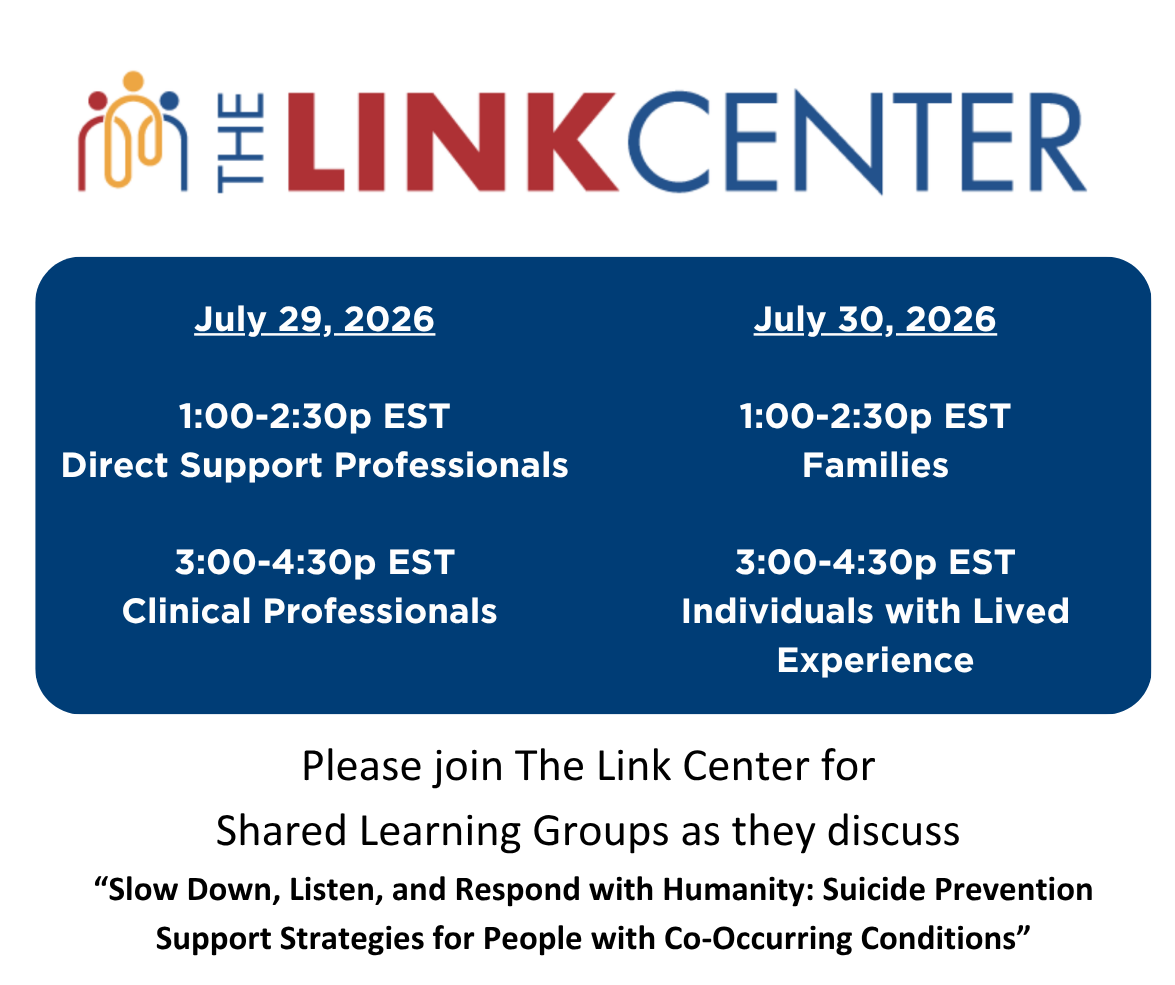
Link Center Shared Learning Groups |
When navigating complex, co-occurring conditions, people can often feel trapped and see no way out, placing them at a higher risk for suicide. While every experience is unique, the most powerful intervention often begins when we slow down, listen deeply, and respond with intention. Join this upcoming Shared Learning Group as we ground ourselves in lived experiences. The group will discuss critical warning signs and risk factors, while sharing actionable strategies and resources to provide ongoing support and restore a sense of hope.
These Shared Learning Groups are an opportunity to dive into important topics together, sharing resources, information, and ideas to better support people with intellectual and developmental disabilities (I/DD), brain injuries, and other disabilities and co-occurring mental health conditions. These meetings will be led by members of the Link Center Steering Committee and project partners. |
|
Grant News from North Dakota |
We are thrilled to celebrate a major step forward for the North Dakota State Penitentiary! As featured on KX News, the facility is now implementing universal brain injury screening for incarcerated individuals - a move funded by the Justice and Mental Health Collaboration Program through the US Department of Justice.
At NASHIA, we are honored to serve as a technical assistance partner supporting this implementation. Why does this matter? Because research shows that a significant percentage of justice-involved individuals are living with an unidentified brain injury.
By identifying these hidden disabilities at entry, the facility can: 🔹 Adapt communication and programming to improve compliance. 🔹 Reduce behavioral incidents and recidivism. 🔹 Support successful reentry into the community.
Andrea Watkins, MS-CCC SLP, CBIST, a resource facilitator with the North Dakota Brain Injury Network, was also interviewed by KFYR+ News about the grant program.
Congratulations to Rebecca Quinn and the North Dakota Brain Injury Network team for their leadership in building a more brain-informed justice system! |
|
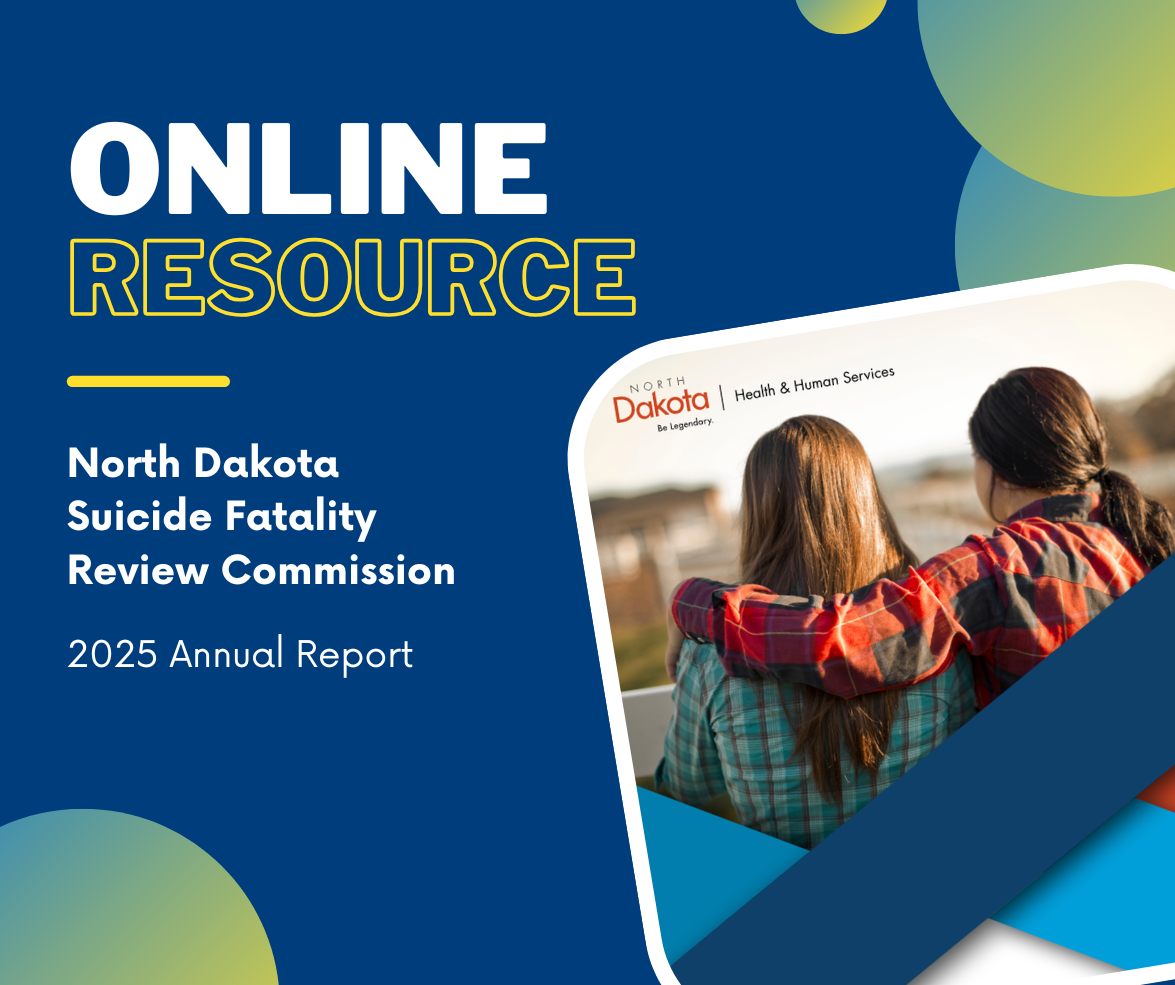
ND Integrates BI into Suicide Fatality Reviews |
The new annual report from the North Dakota Suicide Fatality Review Commission incorporates brain injury in two ways:
1️⃣ Recommends increasing provider education on concussion and head injury as risk factors for suicide, and ensuring all concussions and head injuries are consistently documented in medical records.
2️⃣ Adds head injuries as being a factor that should be looked at by the panel. Congratulations to our North Dakota partners and advocates for ensuring this "hidden factor" is finally brought to light. |
|
You received this email because you subscribed to our list. You can unsubscribe at any time. PO Box 59165 Potomac, MD 20859 USA |
|
|
|